

KI-Suche in Wien: Welche Bäckereien ChatGPT, Gemini & Co. empfehlen
Editor öffnen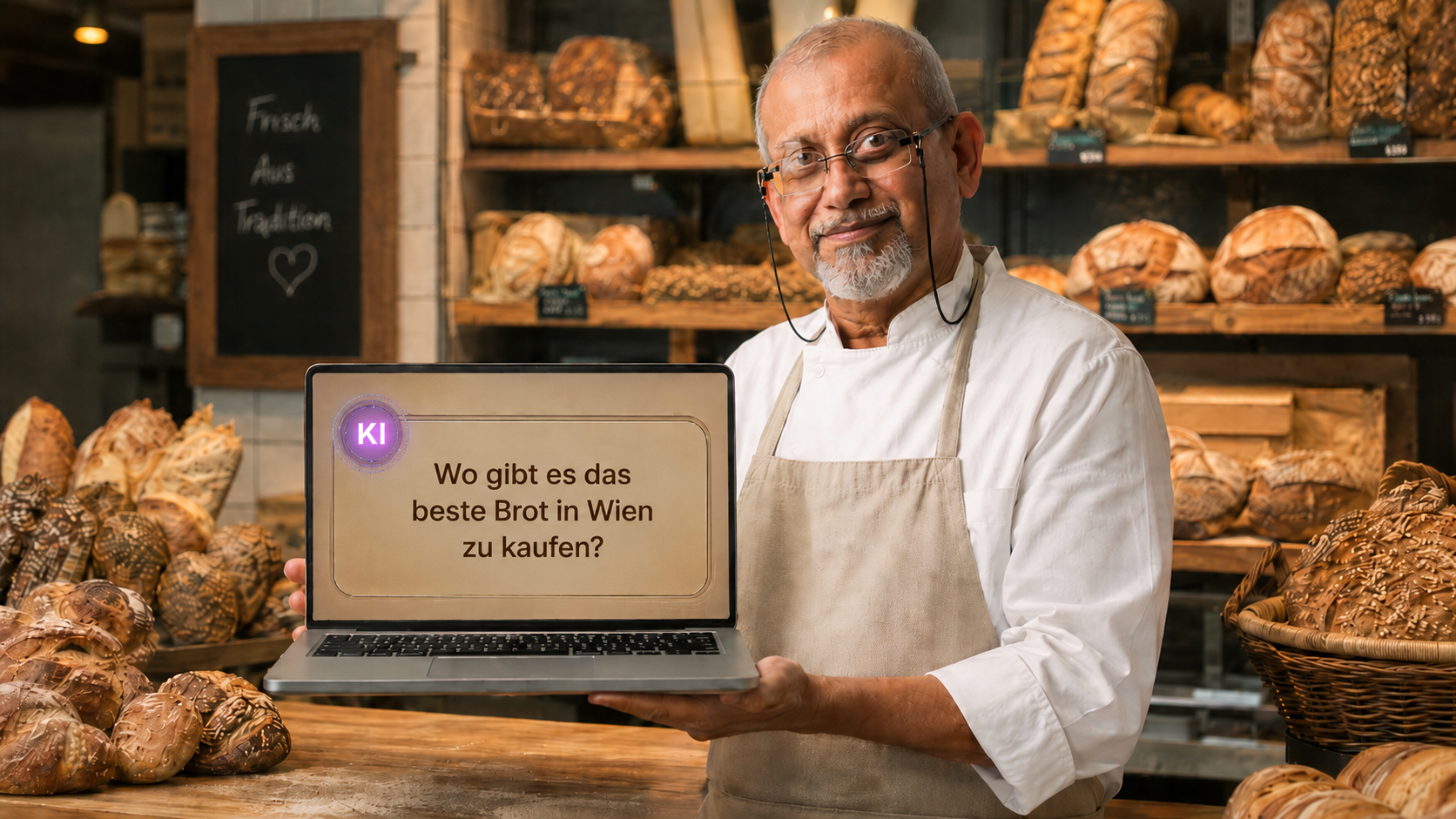
Wer in Wien nach gutem Brot, einer Bio-Bäckerei oder der besten Semmel sucht, bekommt längst nicht mehr nur klassische Google-Treffer. ChatGPT, Gemini, Perplexity und andere KI-Systeme liefern direkte Empfehlungen – und entscheiden dabei auch, welche Marken genannt und welche Websites als Quelle herangezogen werden. Eine aktuelle Untersuchung der Wiener Digital-Media-Agentur SlopeLift zeigt nun erstmals detailliert, wie sichtbar große Wiener Bäckereien in dieser neuen Suchwelt sind.
Joseph Brot führt bei Erwähnungen, Öfferl bei Zitierungen
Untersucht wurden 14 große Wiener Bäckereimarken anhand von 80 Prompts in acht Themenkategorien. Die Antworten wurden im Juli 2026 über sechs Systeme beobachtet: ChatGPT, Perplexity, Google AI Overviews, Google AI Mode, Microsoft Copilot und Gemini. Damit misst die Studie nicht klassische Google-Rankings, sondern wie häufig Marken in generierten Antworten vorkommen und welche Domains als Quellen erscheinen.
Bei der sogenannten Brand Coverage liegt Joseph Brot mit 45,3 Prozent knapp vor der Bio-Bäckerei Öfferl mit 44,4 Prozent. Ströck folgt mit 30,6 Prozent deutlich dahinter. Anker erreicht 15,9 Prozent, Felber 15,8 Prozent. Auch bei der von SlopeLift ausgewiesenen „Likelihood to Buy“ liegt Joseph Brot mit 77 Prozent vorne, gefolgt von Öfferl mit 74 Prozent und Ströck mit 73 Prozent.
Bei den Website-Zitierungen dreht sich das Bild. oefferl.bio kommt auf 2.098 Domain Citations und liegt damit vor joseph.co.at mit 1.877. Bemerkenswert ist Bäckerei Grimm: Bei den Markenerwähnungen nur auf Rang sechs, schafft es die Website mit 1.023 Zitierungen auf Rang drei – noch vor Ströck, Felber und Anker. Für Betriebe ist genau diese Differenz interessant: Markenbekanntheit allein entscheidet offenbar nicht darüber, ob die eigene Website von KI-Systemen als Quelle verwendet wird.
Wenn die KI die Marke nennt, aber auf andere Quellen verweist
Wie groß die Lücke zwischen Empfehlung und tatsächlicher Verlinkung sein kann, zeigt der Prompt „Wo gibt es das beste Brot in Wien zu kaufen?“. Joseph Brot erreicht dabei laut Studie 150 Markenerwähnungen, Öfferl 147. Die eigenen Websites werden jedoch nur ein- beziehungsweise zweimal zitiert. Deutlich häufiger greifen die Systeme auf Google, Reddit und MeinBezirk zurück. Gerade bei lokalen und subjektiven Empfehlungen entsteht damit ein Quellenmix, der mit der klassischen Vorstellung von Suchmaschinenoptimierung nur noch teilweise übereinstimmt.
Im gesamten Untersuchungsfeld ist google.com mit 3.813 Zitierungen die häufigste Quelle, gefolgt von wien.info mit 3.177, reddit.com mit 2.857 und 1000thingsmagazine.com mit 2.688. Erst danach folgt mit oefferl.bio die erste Website einer Bäckerei. Ein einzelner Reddit-Thread zur Frage nach der besten Wiener Bäckerei wurde über mehrere Prompts hinweg mehr als 300-mal als Quelle herangezogen.
Österreichische Fachinhalte fehlen bei Wissensfragen
Für die heimische Branche besonders relevant ist ein weiteres Detail: Bei allgemeinen Wissensfragen zu Brot und Backwaren greifen die KI-Systeme laut SlopeLift auffällig oft auf deutsche oder generische Fachquellen zurück. Österreichische Bäckereien spielen in dieser Kategorie kaum eine Rolle. Daraus entsteht eine konkrete Chance für Betriebe, Innungen und Fachmedien: gut strukturierte Inhalte zu Rohstoffen, Sauerteig, Brotqualität, Lagerung, Allergenen, regionalen Spezialitäten oder Nachhaltigkeit können nicht nur für klassische Suchmaschinen, sondern auch als zitierfähige Quellen für KI-Systeme interessant werden.

KI-Suche ist kein Randthema mehr
Die wachsende Bedeutung solcher Antwortsysteme ist inzwischen auch statistisch sichtbar. Laut Statistik Austria hatten 2025 bereits 41 Prozent der 16- bis 74-Jährigen in Österreich zumindest einmal generative KI-Tools verwendet. Internationale Nutzungsdaten zeigen zugleich, dass direkte KI-Antworten das Klickverhalten verändern können. Das Pew Research Center beobachtete bei US-Google-Nutzern, dass bei Suchseiten mit AI Overview deutlich seltener auf externe Ergebnisse geklickt wurde; Links direkt aus der KI-Zusammenfassung wurden nur in rund einem Prozent der beobachteten Besuche geöffnet. Die Zahlen sind nicht eins zu eins auf Österreich oder die Bäckereibranche übertragbar, zeigen aber die Richtung: Sichtbarkeit in der Antwort und tatsächlicher Website-Besuch sind zwei verschiedene Größen.
Was Bäckereien jetzt daraus ableiten können
Für Bäckereien bedeutet das nicht, klassische SEO-Arbeit über Bord zu werfen. Im Gegenteil: Technisch saubere Websites, klare Produktinformationen, lokale Standortdaten und verständliche Fachinhalte bleiben die Basis. Dazu kommt jedoch eine zweite Ebene. Wer in KI-Antworten vorkommen will, braucht Inhalte, die eindeutig, aktuell und zitierbar sind – und sollte zugleich im digitalen Umfeld der eigenen Marke präsent sein, etwa in regionalen Medien, Tourismusportalen, Fachplattformen und relevanten Community-Diskussionen.
Die SlopeLift-Erhebung ist dabei als Branchenindikator zu lesen, nicht als unveränderliches Ranking. Sie stammt von einer Digital-Media-Agentur, basiert auf einem definierten Prompt-Set und misst ausgewählte KI-Systeme über einen begrenzten Zeitraum. SlopeLift selbst weist darauf hin, dass sich die Brand Coverage innerhalb weniger Tage um mehrere Prozentpunkte verschieben kann. Für die Praxis ist gerade das die wichtigste Botschaft: KI-Sichtbarkeit wird dynamisch – und für Bäckereien zu einem neuen Teil der digitalen Markenführung.