
Bio-Markt in Österreich wächst kräftig
Editor öffnen
Der österreichische Bio-Markt hat 2025 wieder deutlich an Fahrt aufgenommen. Rund 3,4 Milliarden Euro wurden mit Bio-Produkten umgesetzt. Gegenüber 2024 entspricht das einem Plus von 7,4 Prozent, wie die aktuelle Umsatzanalyse der AMA-Marketing zeigt. Damit wächst der Bio-Umsatz deutlich stärker als die Inflationsrate von 3,7 Prozent.
Für die Lebensmittelbranche ist vor allem dieser Abstand bemerkenswert. Das Umsatzplus lässt sich nicht allein durch höhere Preise erklären. Nach Angaben der AMA-Marketing wurden auch tatsächlich mehr Bio-Produkte verkauft. Für Bäckereien, Konditoreien und gastronomisch ausgerichtete Betriebe ist dabei besonders interessant, dass sich die positive Entwicklung nicht auf den klassischen Lebensmitteleinzelhandel beschränkt.
Bio wächst über mehrere Absatzkanäle
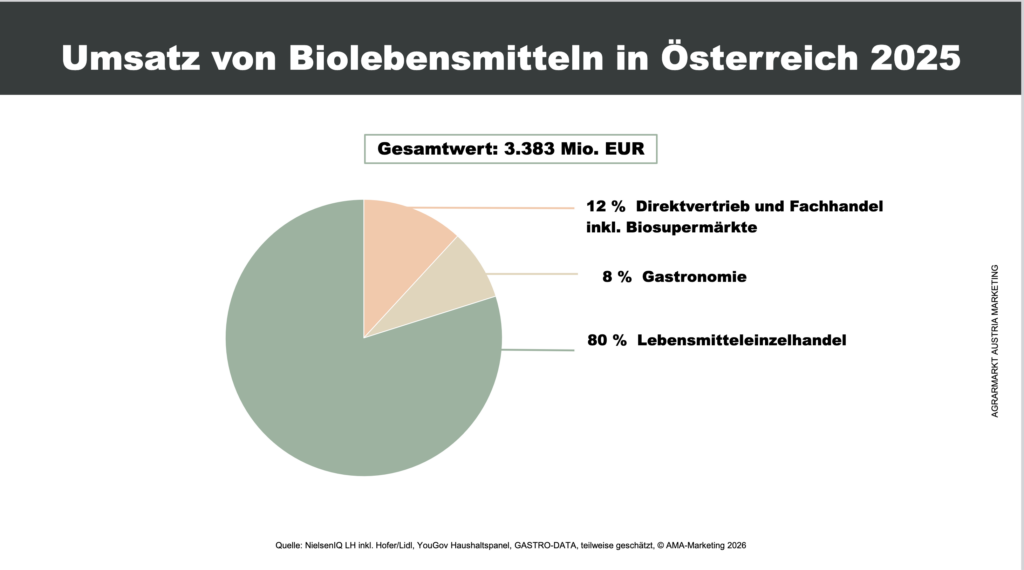
Der Lebensmitteleinzelhandel bleibt mit Abstand der wichtigste Vertriebsweg für Bio-Produkte. Rund 80 Prozent des gesamten Bio-Umsatzes wurden 2025 dort erzielt. Auf Direktvertrieb und Fachhandel entfielen weitere 12 Prozent, die Gastronomie erreichte einen Anteil von 8 Prozent.
Gerade die Entwicklung außerhalb des klassischen Handels ist für das Lebensmittelhandwerk relevant. Fachgeschäfte, Direktvermarkter und gastronomische Betriebe profitieren davon, dass Konsumenten Bio offenbar wieder stärker in ihre Kaufentscheidungen einbeziehen.

„Die Zahlen zeigen, dass Bio nach den herausfordernden vergangenen Jahren wieder deutlich an Dynamik gewonnen hat“, sagt Christina Mutenthaler-Sipek, Geschäftsführerin der AMA-Marketing. Besonders positiv bewertet sie, dass sich die Entwicklung sowohl im Lebensmitteleinzelhandel als auch in Gastronomie, Direktvertrieb und Fachhandel bemerkbar macht.
Gastronomie gewinnt bei Bio an Bedeutung
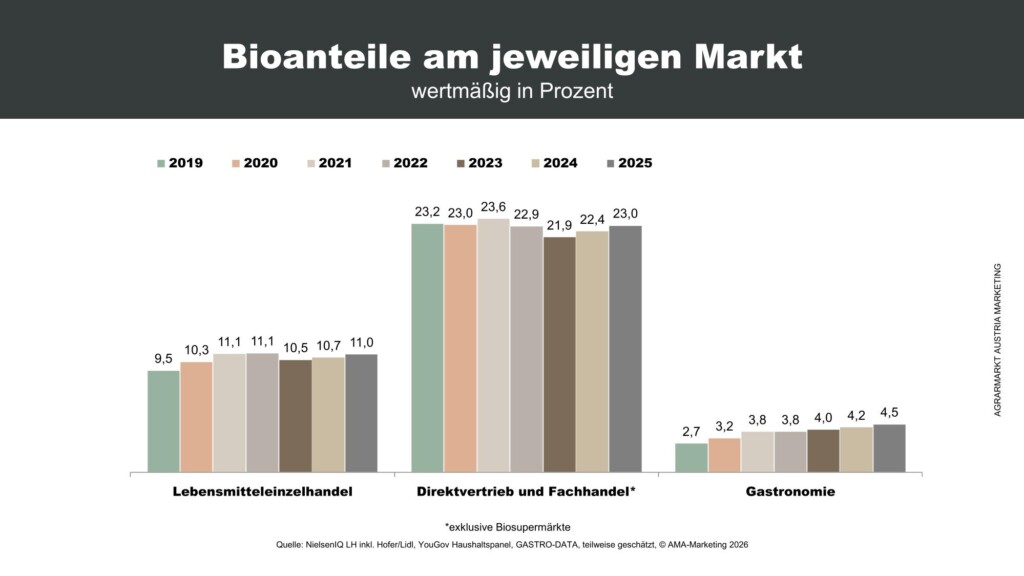
Besonders dynamisch entwickelte sich die Gastronomie. Der Bio-Anteil stieg dort in den vergangenen Jahren kontinuierlich und erreichte zuletzt 4,5 Prozent.
Für Betriebe mit Café, Frühstücksangebot, Snacks oder Mittagsgeschäft eröffnet diese Entwicklung zusätzliche Möglichkeiten. Bio ist damit längst nicht mehr ausschließlich ein Thema für das Supermarktregal. Auch im Außer-Haus-Konsum findet das Segment zunehmend seinen Platz.
Für Bäckereien und Konditoreien kann diese Entwicklung insbesondere bei Rohstoffen wie Mehl, Milchprodukten, Eiern oder weiteren Zutaten sowie bei der Positionierung einzelner Sortimente interessant sein. Die AMA-Zahlen selbst treffen allerdings keine Aussage darüber, welche Produktgruppen innerhalb der Gastronomie besonders stark wachsen.
Handel erreicht wieder hohes Niveau
Auch im Lebensmitteleinzelhandel hat Bio nach einer schwächeren Phase wieder aufgeholt. Der Bio-Anteil bei Lebensmitteln und Getränken erreichte 2025 erneut 11 Prozent. Damit liegt er wieder auf dem hohen Niveau der Jahre 2021 und 2022.
Während der Corona-Pandemie war die Nachfrage nach Bio-Produkten stark gestiegen. Danach schwächte sich die Entwicklung zunächst ab. 2025 setzte sich nun wieder ein deutlicher Aufwärtstrend durch.
Noch höher liegt der Bio-Anteil außerhalb des klassischen Lebensmitteleinzelhandels. Im Direktvertrieb und Fachhandel erreichte er 23 Prozent.
Bio wird wieder stärker nachgefragt
Die Zahlen markieren damit eine spürbare Veränderung gegenüber den schwierigeren Jahren nach dem pandemiebedingten Bio-Boom. Ein Umsatzwachstum von 7,4 Prozent bei einer Inflationsrate von 3,7 Prozent spricht dafür, dass Bio 2025 nicht nur nominell, sondern auch über höhere Verkaufsmengen zugelegt hat.
Für das österreichische Lebensmittelhandwerk ist vor allem die breite Entwicklung interessant. Bio wächst nicht nur dort, wo große Handelsketten das Sortiment und die Preisgestaltung bestimmen. Auch Fachhandel, Direktvertrieb und Gastronomie legen zu.
Gerade für handwerkliche Bäckereien und Konditoreien kann Bio damit wieder stärker zu einem Instrument der Differenzierung werden. Entscheidend bleibt jedoch, ob ein entsprechendes Angebot zum eigenen Betrieb, zur Kundschaft und zur Preispositionierung passt. Der österreichische Gesamtmarkt liefert dafür jedenfalls wieder positivere Rahmenbedingungen als noch vor wenigen Jahren.
